How to Choose a Car Jump Starter (and Tire Inflator)
A dead battery on a cold morning is the moment you find out whether the jump starter in your trunk actually works. The category is full of inflated peak-amp claims and units that cannot turn over a real engine. This guide covers the specs that matter, how to size a jump starter to your engine, and whether a combo unit with a tire inflator is worth the money.
Peak amps vs cranking amps
Peak amps is a marketing number; cranking amps (and joules) better predict whether a unit will actually start your engine. A 4-cylinder gas engine usually needs roughly 400–600 peak amps, while V8s and diesels want 1000+.
When a listing quotes only peak amps with no cranking/starting rating, treat the number cautiously. Reputable units list both, and the cranking figure is the one that starts a cold engine.
Match it to your engine
Gas vs diesel matters more than people expect — diesels need far more cranking current than gas engines of the same size. Cold weather reduces both the starter's output and your battery's, so buy with headroom above your engine's minimum.
A jump starter that is just adequate in summer will struggle at 20°F. Sizing up one tier is cheap insurance for a part you carry for emergencies.
Battery type and capacity
Lithium jump starters are light, hold a charge for months, and fit in a glovebox. Lead-acid units are heavier and self-discharge faster but can be cheaper per amp. For most drivers, lithium is the practical choice.
Capacity (mAh or watt-hours) determines how many jumps you get per charge. A higher-capacity unit also doubles as a power bank for phones, which is useful the same day you actually need it.
Combo units with a tire inflator
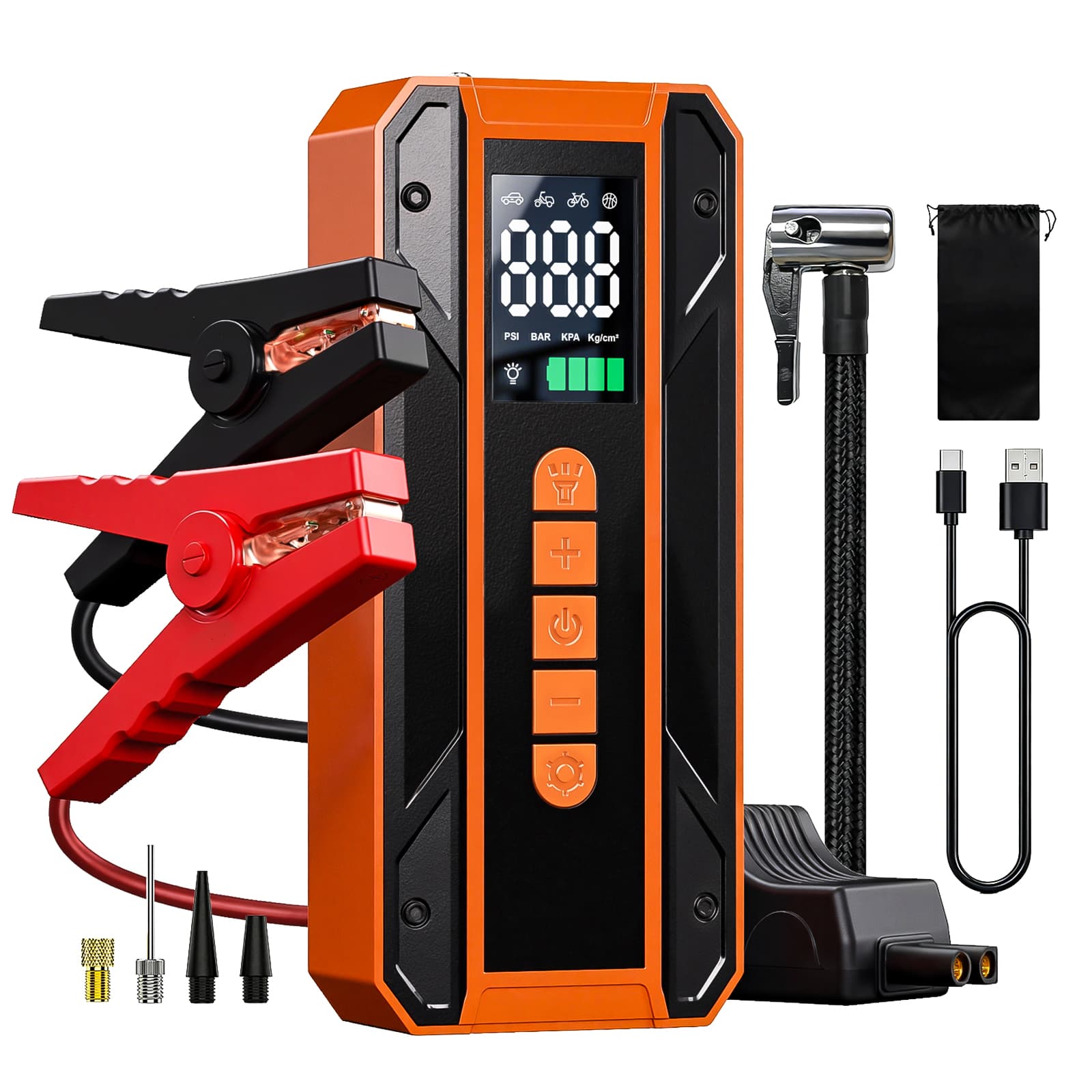
A built-in 12V tire inflator is genuinely useful — it tops off tires without a gas-station trip and saves you from a slow leak becoming a roadside event. The spec to check is real airflow, not just a max-PSI number with no flow rate behind it.
Confirm whether the inflator runs off the starter's own battery or a separate 12V port. A self-contained unit is one device to keep charged; a 12V-only inflator is useless when the car that needs it is the one that won't start.
What to skip
Skip units with no reverse-polarity protection — a crossed connection on a dead-battery morning can damage your electronics. Skip peak-amp claims with no cranking rating, and inflators that quote max PSI without any airflow figure.
A no-name jump starter that cannot show its cranking amps or safety features is not the part you want to discover is inadequate at the moment you need it.
Shop surplus auto deals
Brand-new overstock, up to 60% off retail. Limited stock — when it is gone, it is gone.
Browse surplus auto →Surplus auto in stock
Grab these before they sell out.
Frequently asked questions
What size jump starter do I need?
Roughly: 400–600 peak amps for a 4-cylinder gas car, 800–1000 for a V6 or larger gas engine, and 1000+ for diesels and trucks. In cold climates, add headroom above those numbers.
Are jump-starter and inflator combos worth it?
For most drivers, yes — one charged device handles the two most common roadside problems. Just confirm the inflator has usable airflow, not only a high max-PSI figure.
How often should I recharge a jump starter?
Lithium units hold a charge for months but check the level every 2–3 months; lead-acid units need it more often. A dead jump starter is worse than none, because you will trust it until it fails.
Is a high max-PSI rating meaningful on an inflator?
Only with a flow rate. Max PSI with no CFM or fill-time figure can mean it cannot actually fill a tire in reasonable time. Look for stated airflow or real-world fill times, not just the peak number.